Showing posts with label Science. Show all posts

Tuesday, November 17

Why do we have day and night?

The Earth takes 24 hours to make one complete turn.
 The Earth

Why do we have day and night?

The Earth takes 24 hours to make one complete turn.
The Earth
Why do we have day and night?
We have day and night because the Earth rotates. It spins on its axis, which is an imaginary line passing through the North and South Poles.
The Earth spins slowly all the time, but we don't feel any movement because it turns smoothly and at the same speed.
How long does it take the Earth to turn around?
The Earth takes a whole day (24 hours) to makea complete turn.Why is the Sun in the sky at some times and not at other times?
At any time half of the Earth faces the sun. This part has day. The other half of the Earth faces away from the Sun. It receives no light. It is dark and has night.
The sun is the source of light for day.
Why does the sun seem to move across the sky?
The Sun does not move. It seems to move across the sky starting in the east in the morning, moving toward the south at noon, and then toward the west as the day ends.
It is the Earth turning that makes it seem as though the Sun is moving.
Day and night time

Tuesday, October 20

Geography of Aragón

The rafts of The Pyrenees


          The history of the navateros that they navigated with his platforms of trunks floating for the rivers pirenaicos it is directly linked to the exploitation of the wood and to the rivers that were descending from the summits pirenaicas.

          Since in the year 1983, Severino Pallaruelo and the veterans navateros of Sobrarbe recovered the decrease of the navatas for the Cinca, already they are three the rivers of the High Aragon that have re-lived through this former trade in honoring to all those highlanders who lived of his work in the mount and in the river.


           Today, the young persons navateros, many of them with dozens of decreases realized in different rivers, both of the High Aragon and of several European countries, can be considered to be good professionals of the decrease of the wood by the rivers and direct inheritors of the tradition of the maderadas in the Pyrenees.


Climate : Aragón


The climate in Aragon is warm and temperate. Aragon has a significant amount of rainfall during the year. This is true even for the driest month. This climate is considered to be Cfa according to the Köppen-Geiger climate classification. The average annual temperature is 15.6 °C in Aragon. Precipitation here averages 1339 mm


Click on the picture to see the activity


Factors affecting weather

         Learn about the occurrences of cool, hot, windy, sunny and rainy weather changes 
around us in an animated manner where the animated characters helps you to understand 
the factors that affects the weather.

Click on the picture to watch the video


The States of a river


Click on the picture to do the exercice

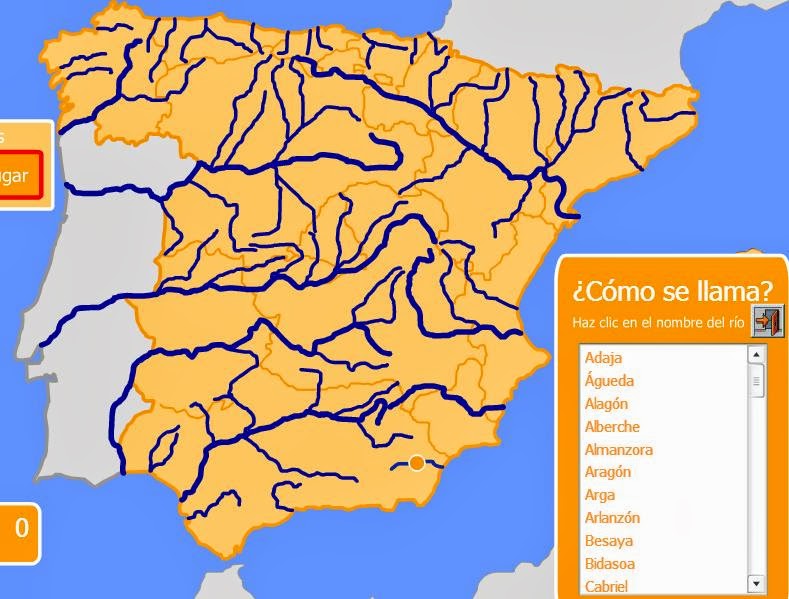
Aragon´s Rivers

Click on the picture 

Thursday, October 1


A Little Moon Madness!


I can't think of anything more fun to teach than space. The moon is one topic that I totally love teaching about! There's just so much great information out there. Nothing gets kids REALLY excited like learning about the moon! I have included some great videos, games and goodies (including a freebie) for you to use in your classroom as you study all about the moon! Hope you and your kids enjoy them!

This impressive video is from National Geographic. It covers it all, and is pretty short!


  Nice basic video and short!


This video is for kids aged third grade and up. It's amazing!


This site has great activities about the moon…kids will love it and very kid-friendly!


If you need a good game for a center during your moon study, this is the one!


Oh My! This site has lots of short moon videos (everything you could need) plus links to games and more! It's from NEOK12


Now for the freebie!


If you like the freebie you might enjoy the resource it came from. It's all about Zog, who is exploring our moon. Kids learn about the phases of the moon through Zog's letters back to his people on Zipton.


Tuesday, April 21

Geografía de Europa


                               JUEGOS INTERACTIVOS


RÍOS DE EUROPA


Ríos de Europa. ¿Dónde está?


CORDILLERAS DE EUROPA

Resultado de imagen de mapa fisico de europa


Friday, April 10

Comunidades autónomas y sus capitales

Comunidades autónomas de España y sus capitales

1. INTRODUCCIÓN

¿Cuántas comunidades autónomas hay en España? ¿Cuáles son sus capitales?
- En el punto 2 podéis encontrar una listado con las 17 comunidades españolas con su respectiva capital.
- En el punto 3 se muestra un mapa con la ubicación geográfica de cada una de las comunidades (y sus capitales).
- En el punto 4 se discute la controvertida capitalidad del País Vasco y Castilla y León (no tienen una capital legalmente establecida) y el actual estatus de las ciudades de Ceuta y Melilla.

2. LISTADO CON LAS COMUNIDADES AUTÓNOMAS DE ESPAÑA Y SUS CAPITALES


3. MAPA CON LAS COMUNIDADES DE ESPAÑA Y SUS CAPITALES

Comunidades de España y sus capitales


4. NOTAS Y ACLARACIONES

  1. El País Vasco y Castilla León NO TIENEN UNA CAPITAL LEGALMENTE ESTABLECIDA. Se le han asignado sus capitales “más reconocidas”: Vitoria y Valladolid, pero es un error afirmar que son sus capitales.
  2. Ceuta y Melilla NO SON COMUNIDADES AUTÓNOMAS “TODAVÍA”. Actualmente tan sólo son ciudades autónomas, su rango como comunidades autónomas de España está en trámite actualmente.

Tuesday, April 7

ORGANIZACIÓN POLÍTICA DE ESPAÑA

LA LEY DE LEYES : LA CONSTITUCIÓN


Página 3


ORGANIZACIÓN DEL PODER POLÍTICO

ORGANIZACIÓN TERRITORIA DE ESPAÑA


JUEGA Y REPASA LAS PROVINCIAS DE ESPAÑA


Wednesday, March 18

Vertientes hidrográficas de España

NUESTROS RÍOS - LOS FACTORES CONDICIONANTES

La longitud de nuestros ríos, su caudal y su régimen a lo largo del año, dependen del clima y del relieve.


El clima
Condiciona el caudal y el régimen a lo largo del año.
En la España húmeda los ríos tienen abundante caudal y régimen regular.
En la España seca, menores caudales y régimen irregular. Algunos sufren fuertes estiajes.


El relieve
Cuando las montañas donde nacen los ríos están próximas al mar, los ríos son cortos.
Si las montañas están alejadas de la costa, los ríos son largos.


NUESTROS RÍOS - VERTIENTES FLUVIALES ESPAÑOLAS


NUESTROS RÍOS - L0S RÍOS DE LA VERTIENTE CANTÁBRICA


NUESTROS RÍOS - L0S RÍOS DE LA VERTIENTE ATLÁNTICA


NUESTROS RÍOS - L0S RÍOS DE LA VERTIENTE MEDITERRÁNEA


A CONTINUACIÓN PON EN PRÁCTICA LO APRENDIDO EN ESTE JUEGO VIRTUAL QUE PUEDE ERSULTAR MUY DIVERTIDO. (Pincha en la imágen)

 http://serbal.pntic.mec.es/ealg0027/esparios2em.html
+


AQUÍ TIENES OTRO JUEGO MÁS SENCILLO
http://www.educa.jcyl.es/educacyl/cm/zonaalumnos/tkPopUp?pgseed=1199088596665&idContent=458


Tuesday, February 10

Electricidad y magnetismo

Os cualgo videos interesantísimos sobre la electricidad y el magnetismo que seguro os sacan de muchas dudas e incluso os sorpenderán.

                                                 Video 1

Video 2


Video 3


                                                                                    Video 4


Video 5


Video 6


                                                                                         Video 7


Video 8

       Video 9


                                                                                    Video 10


Video 11


                            Video 12


Video 13


Wednesday, June 19

La Edad Moderna


1. LA EDAD MODERNA
- La Edad Moderna: Principales acontecimientos. La Ciencia y la Cultura. PDF
- El absolutismo. PDF
- Los avances en la navegación. PDF
- Los avances científicos y técnicos: pág. 181 libro de texto + Invetos por fechas
  • Actividades del tema 13.1. PDF

2. LA ESPAÑA DE LOS REYES CATÓLICOS (finales del siglo XV y principios del XVI)
- El Reinado de los Reyes Católicos. PDF
- Los viajes de Colón. VIDEO
- Colón y el nuevo mundo VIDEO
- El decubrimiento de América. CÓMIC
  • Actividades tema 13.2. PDF
¿? Investiga:
  • La vuelta al mundo. PDF
  • Los pueblos precolombinos. PDF
3. LA DINASTÍA DE LOS HASBURGO (siglos XVI y XVII)
- El Imperio Hispánico (Carlos I). VIDEO
- La dinastía de los Hasburgo (casa de Austria). PDF
- El Siglo de Oro. PDF
  • Actividades t13.3. PDF
4. LA DINASTÍA DE LOS BORBÓN (siglo XVIII)
- La dinastía de los Borbón. PDF
  • Actividades t13.4. PDF
5. LA SOCIEDAD Y LA ECONOMÍA
- La sociedad y la economía. PDF
- Los estamentos. JPG
- Esquema de los estamentos:. JPG


Friday, June 7

Cadena de preguntas de Conocimiento del medio

1. ¿Qué es la fecundación. ¿ y el embarazo? ¿ Y el parto?
2. ¿Cuáles son los componentes de ecosistema? Explícalos.
3. ¿ De qué depende el clima de una zona?
4. Nombra las principales actividades del sector primario.
5. Nombra las diferentes relaciones entre los seres vivios y explica cada una.
6. ¿ Qué son los recursos naturales?.
7. ¿ Puede haber dos tipos de fecundación ? Nombralas y explícalas.
8. ¿ Qué es una enfermedad?.
9.  Di las capitales de Polonia, Eslovenia, Letonia, Lituania, Rumania y Grecia.
10. ¿ Cuáles son los consejos para prevenir enfermedades infecciosas?.
11. ¿ Qué es una especie?.
12.  ¿ Qué es la refracción de la luz?

Saturday, May 18

Unit 8 : Rocks and Minerals


1. LAS ROCAS

(pincha en la imágen)


- LAS ROCAS Y SUELOS DE LA CORTEZA TERRESTRE 
(pincha en la imágen)


- EL CICLO DE LAS ROCAS
(pincha en la imágen)


-ESQUEMA
 enlace


- ACTIVIDADES INTERACTIVAS 
actividad 01 actividad 02 - actividad 03 - actividad 04

2 LOS MINERALES

- LA UTILIDAD DE LOS MINERALES enlace
- LA EXTRACCIÓN DE LOS MINERALES: MINAS  , EXPLOTACIONES MINERAS E IMPACTO MEDIAMBIENTAL,
- PROPIEDADES DE LOS MINERALES enlace

INVESTIGA:


Friday, April 19

Calculation of areas


Actividades con cálculo de áreas 1                                 


 Actividades 2